

The first of the Five Obsessions of Elite Organizations®
Great People
If you’re like most of the founders I’ve worked with, the people who helped you build your company are the people you trust most. They pulled the all-nighters to get the company off the ground, and they know every customer and every workaround. Then at some point, the company starts growing faster than some of them can grow. That is where a lot of good companies stall. We see it most often somewhere between $50 million and $100 million in revenue, but it can happen at any stage of growth.
Would it be unreasonable to spend about 10 minutes finding out how your company scores on Great People?
What Great People Means
Great People is the first of the Five Obsessions: Great People, an Inspiring Purpose, Optimized Playbooks, a Culture of Performance, and Growing Profits and Cash Flow. It means you commit to developing, recruiting, and keeping people who live your values, have the skills and drive to perform to a high standard, and care about what your company is trying to accomplish. It also means you stay disciplined about it when it gets uncomfortable, which is usually when it matters most. Every other obsession depends on this one, because your playbooks, your culture, and your profit and cash flow are only as strong as the people running them.
When Loyalty Holds the Company Back
The hardest part of Great People is the part most founders avoid talking about. You have a lot of love and loyalty for the people who got you here, so you hang on too long, the business outgrows them, and growth stalls. Jocko Willink and Leif Babin call this the Ultimate Dichotomy in their book The Dichotomy of Leadership: caring deeply for each person on your team while still doing what the mission requires.
Here’s what happens if you don’t deal with it. As the company stalls, your frustration rises. The people who can’t keep up feel the pressure too, because they know they aren’t performing. Team chemistry starts to suffer, performance slips further, and the whole thing feeds on itself until the love and loyalty that made you hang on in the first place starts to fade.
If your company keeps growing at its current pace, which seat on your leadership team will it outgrow first?
Coach Up or Coach Out
Coach up or coach out means you give every person a real opportunity to grow into what their seat requires. When they can’t grow fast enough to keep pace with the company, you help them into a role that fits, inside your company or outside it, and you treat them with respect either way.
At Next Level Growth, we believe every leader in your company has to see coaching as part of their job. A great operations leader for one to ten locations is likely to be more successful and a lot happier as a regional director, or helping a smaller company get to ten.
What It Looks Like When a Founder Gets It Right
Lauren Bailey, co-founder and CEO of Upward Projects, the hospitality group behind Postino, was facing exactly this in 2017. The company had twelve locations, seven of them Postino, and was closing a private equity deal. Her leadership team had done an outstanding job getting there, and she could see that going from seven Postino locations to thirty-five would take people who had already operated at that scale.
Over the next few years, she brought in a CFO with experience at two larger hospitality companies and a COO with more than twenty years of executive operations experience at P. F. Chang’s and Shake Shack. When the goal grew to fifty locations, she added a chief development officer who came from Chipotle Mexican Grill and CAVA. Her controller moved off the leadership team, stayed with the company as a direct report to the new CFO, and has since grown into the senior corporate controller role. By the time Five Obsessions of Elite Organizations went to print, Postino had grown to more than forty locations and had reached its goal of thirty-five ahead of schedule.

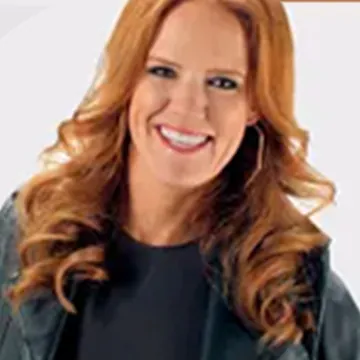 Lauren BaileyCo-founder and CEO, Upward Projects
The A-Player System
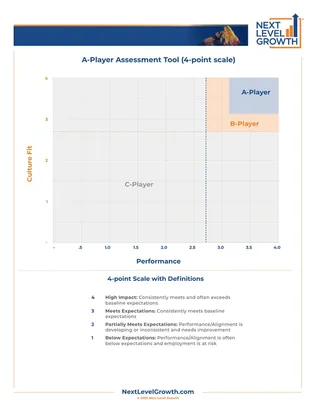
If you’re like most of the companies we work with, you already have people with A-Player potential inside your company. What’s usually missing is a consistent way to measure performance that your managers will actually use, instead of a process so complicated they quietly stop doing it.
Brad Smart’s Topgrading defines an A-Player as someone in the top 10 percent of talent available for a position in the entire market, not just in your company. At Next Level Growth, we help each client build its own A-Player System around five parts:
Core Values that you discover from the people you would take with you if you had to start the company over.
The Next Level Accountability Chart®, which gives every seat in the company clear expectations.
An Onboarding System that sets those expectations before someone’s first day.
Quarterly Calibration™, a short conversation every quarter between each leader and each direct report about core values and performance.
Coaching Plans for anyone performing below the standard.
Clear Expectations for Every Seat
Most of our frustrations between people are a result of unclear expectations. I’ve said that to almost every leadership team I’ve worked with, and the Next Level Accountability Chart® is how we fix it. It goes a step further than a traditional org chart by giving every seat three things:
- A Mission, one sentence describing the consistent, high-level result the person in that seat must deliver to be successful.
- A Most Critical Outcome®, the single most important measurable outcome for that seat.
- Obsessions, the two to six things the person in that seat must obsess about every day to be successful.
Each seat’s Mission supports the Mission of the seat it reports to. When every seat is that clear, your people know exactly what success looks like in their role, and your leaders know exactly where to coach.
Your Leadership Team Comes First
Patrick Lencioni calls it Team One. Every leader on your leadership team has to put that team ahead of the department they run. When they don’t, your leadership team meetings start to look like Congress, with each leader lobbying for their own people, and the rest of the company feels it as silos and departments fighting each other instead of working toward the same goal.
The Great People Tools From the Book
These are the tools from the Great People chapter, and what each one helps your leadership team do.
The A-Player System
Five parts that help your leaders measure and develop the people in every seat.
In Chapter 3 of the bookNext Level Accountability Chart®
A Mission, a Most Critical Outcome® and Obsessions for every seat, so expectations are clear before anyone is measured against them.
In Chapter 3 of the bookMost Critical Outcome®
The one measurable result that shows whether a seat is paying for itself.
In Chapter 3 of the book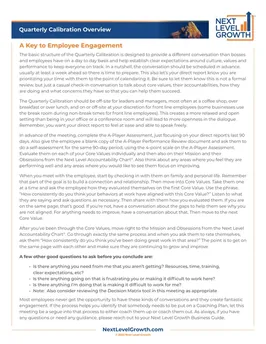
 Free download
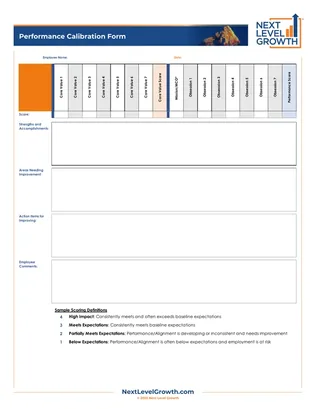
Quarterly Calibration™
A short conversation every quarter between each leader and each direct report about core values and performance.
Free download in the Tools libraryPerformance Evaluation Review, PDF
Michael on Great People
In this short video, Michael walks through the Next Level Accountability Chart® and how a Mission, a Most Critical Outcome® and Obsessions for every seat take the guesswork out of coaching your people.
A Client’s Story, in Their Own Words
“Personally, the biggest benefit to me as the CEO of Sensei has been to be able to focus on my passions and enable others to do the same with clear ownership and expectations for every role.”
 Kenneth Steiness, CEO of Sensei Project Solutions

Read the Great People Chapter Free
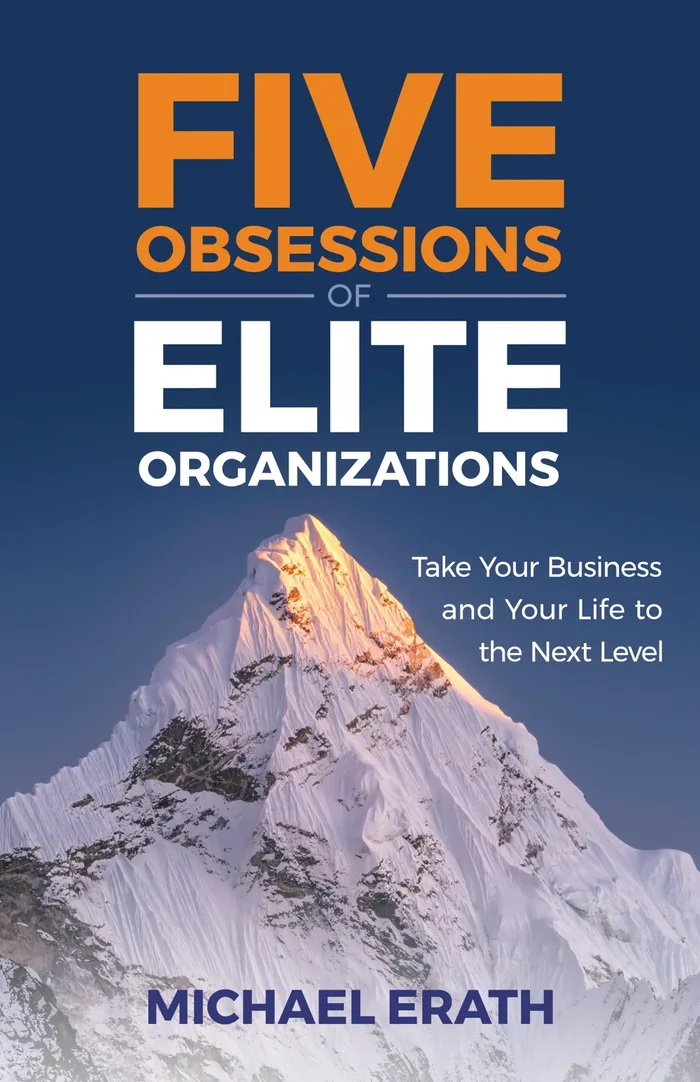
The full Great People chapter is free, including how Lauren rebuilt her leadership team and the exercise we use to help leadership teams discover their core values.
Is it a bad idea to read a chapter tonight and see whether it describes your company?

Go Deeper on Great People
For the step-by-step work of hiring and developing A-Players, read the full article on nextlevelgrowth.com.
Five Quick Questions About Great People
What is an A-Player?
In the book, an A-Player is someone in the top 10 percent of talent available for a position, measured against the entire market, not just your company. The definition comes from Brad Smart’s Topgrading. A-Players consistently exceed expectations, fit your culture and values, and keep looking for ways to improve themselves and their teams.
What is the Next Level Accountability Chart®?
It’s the book’s tool for setting clear expectations for every seat in your company. Each seat gets a Mission, a Most Critical Outcome® and two to six Obsessions. Each seat’s Mission supports the Mission of the seat it reports to, all the way up to the CEO.
What does coach up or coach out mean?
It means every person gets a real opportunity to be coached up to what their seat requires. When someone can’t grow fast enough to keep pace with the company, you coach them into another role that fits, or you coach them out, and you treat them with respect either way.
How many Obsessions should one seat have?
Two to six. Senior leaders usually have four to six, and frontline employees as few as two or three. Each Obsession starts with a verb, because it describes what the person in that seat does every day to be successful.
What do I do with a loyal long-time employee who no longer fits the seat?
Start by making the expectations for the seat clear, then coach them against those expectations. A lot of long-time employees are great culture fits who would be more successful, and a lot happier, in a different role. If they can’t keep pace in any seat the company needs, helping them move on with respect can be the kind thing to do, for them and for the rest of your team.


Find Out Where Your Company Stands
Great People is one of five scores in the Elite Organizations Assessment. It only takes about 10 minutes, and one of our team members emails you a free personalized findings report within 1 business day.
Is it a bad idea to see your highest and lowest scores before your next leadership team meeting?
Take the assessment